More on France - and another obscure opera
A few more observations on our French trip, to add to Gill's below...
It was a great, if busy, five days in France. As well as the stunning hotel Château Les Crayéres on the outskirts of Rheims we stayed in rather more modest establishments in Cambrai, Compiégne and Douai (don't bother) and briefly visiting many lovely places en route between them. Perhaps the the finest sight of all was the impossibly romantic chateau at Chantilly. Our photos are at our online gallery.
The highlight of the whole trip, though, has to be Château Les Crayéres, about which Gill has already written. I must say, though, that the look on her face when the waiter uttered the immortal line "and how would madame like her pigeon?" was another great sight of the trip!
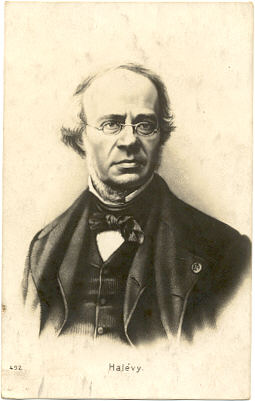 The original reason for making the trip was to meet up in Compiégne with our friend Volker (publisher of Raff scores) to see yet another highly obscure opera at the Second Empire city's Theatre Imperial. This year it was Charles VI by Fromental Halèvy.
It's a grand opera in five acts which tells the pre-story, as it were, to Joan of Arc. To be fair, the French do have a point in complaining about our Henry V's invasion and claim to the French throne. It's set immediately after they were trounced by us at Agincourt. Obviously there's no mention of that awkward fact, and it begins with a rousing male chorus "Never, never will we submit to 'Les Anglais'"! The six principals were in costume and acted, but the chorus were in evening dress, standing, or sitting, at the back of the stage and were hidden by a black screen which was raised and lowered as their presence was needed. No scenery, but the odd prop (a chair, a table etc.). All in all, my initial reaction was that it was disappointing value for money - our tickets were €90 a head.
That said, the principals were in fine voice and the chorus' contribution was impressive. As for the music, I suppose that the obvious comparisons are Auber and Meyerbeer. I'd certainly say that Halèvy was the equal of the former, his melody (particularly in the soprano numbers) has a longer-breathed quality and he could certainly pen a seductive tune or two. On the evidence of this piece and of his rather better known La Juive (actually recorded a couple of times that one) I miss Meyerbeer's unerring way of building up to an act's climax from the very start, screwing up the tension until you almost beg for the denouement. Charles VI was no Les Huegenots or Le Proféte. However, the piece was very melodious throughout and its easy to see why it scored such a hit in its time - 1843 I think. No ballet, naturally, given the staging constraints but it still lasted around 4 hours excluding the two intervals. It was the only performance. Can you imagine anybody here or in the US daring to stage (or even semi-stage) such a thing?
We'd taken the precaution of booking a table at "a little restaurant we know" for after the performance (it began at the civilised hour of 4 pm) and we, enjoyable though the evening had been, we felt that we'd earned a convivial meal!
It was a great, if busy, five days in France. As well as the stunning hotel Château Les Crayéres on the outskirts of Rheims we stayed in rather more modest establishments in Cambrai, Compiégne and Douai (don't bother) and briefly visiting many lovely places en route between them. Perhaps the the finest sight of all was the impossibly romantic chateau at Chantilly. Our photos are at our online gallery.
The highlight of the whole trip, though, has to be Château Les Crayéres, about which Gill has already written. I must say, though, that the look on her face when the waiter uttered the immortal line "and how would madame like her pigeon?" was another great sight of the trip!
The original reason for making the trip was to meet up in Compiégne with our friend Volker (publisher of Raff scores) to see yet another highly obscure opera at the Second Empire city's Theatre Imperial. This year it was Charles VI by Fromental Halèvy.It's a grand opera in five acts which tells the pre-story, as it were, to Joan of Arc. To be fair, the French do have a point in complaining about our Henry V's invasion and claim to the French throne. It's set immediately after they were trounced by us at Agincourt. Obviously there's no mention of that awkward fact, and it begins with a rousing male chorus "Never, never will we submit to 'Les Anglais'"! The six principals were in costume and acted, but the chorus were in evening dress, standing, or sitting, at the back of the stage and were hidden by a black screen which was raised and lowered as their presence was needed. No scenery, but the odd prop (a chair, a table etc.). All in all, my initial reaction was that it was disappointing value for money - our tickets were €90 a head.
That said, the principals were in fine voice and the chorus' contribution was impressive. As for the music, I suppose that the obvious comparisons are Auber and Meyerbeer. I'd certainly say that Halèvy was the equal of the former, his melody (particularly in the soprano numbers) has a longer-breathed quality and he could certainly pen a seductive tune or two. On the evidence of this piece and of his rather better known La Juive (actually recorded a couple of times that one) I miss Meyerbeer's unerring way of building up to an act's climax from the very start, screwing up the tension until you almost beg for the denouement. Charles VI was no Les Huegenots or Le Proféte. However, the piece was very melodious throughout and its easy to see why it scored such a hit in its time - 1843 I think. No ballet, naturally, given the staging constraints but it still lasted around 4 hours excluding the two intervals. It was the only performance. Can you imagine anybody here or in the US daring to stage (or even semi-stage) such a thing?
We'd taken the precaution of booking a table at "a little restaurant we know" for after the performance (it began at the civilised hour of 4 pm) and we, enjoyable though the evening had been, we felt that we'd earned a convivial meal!
posted by Mark at
1:38 pm


0 Comments:
Post a Comment
<< Home